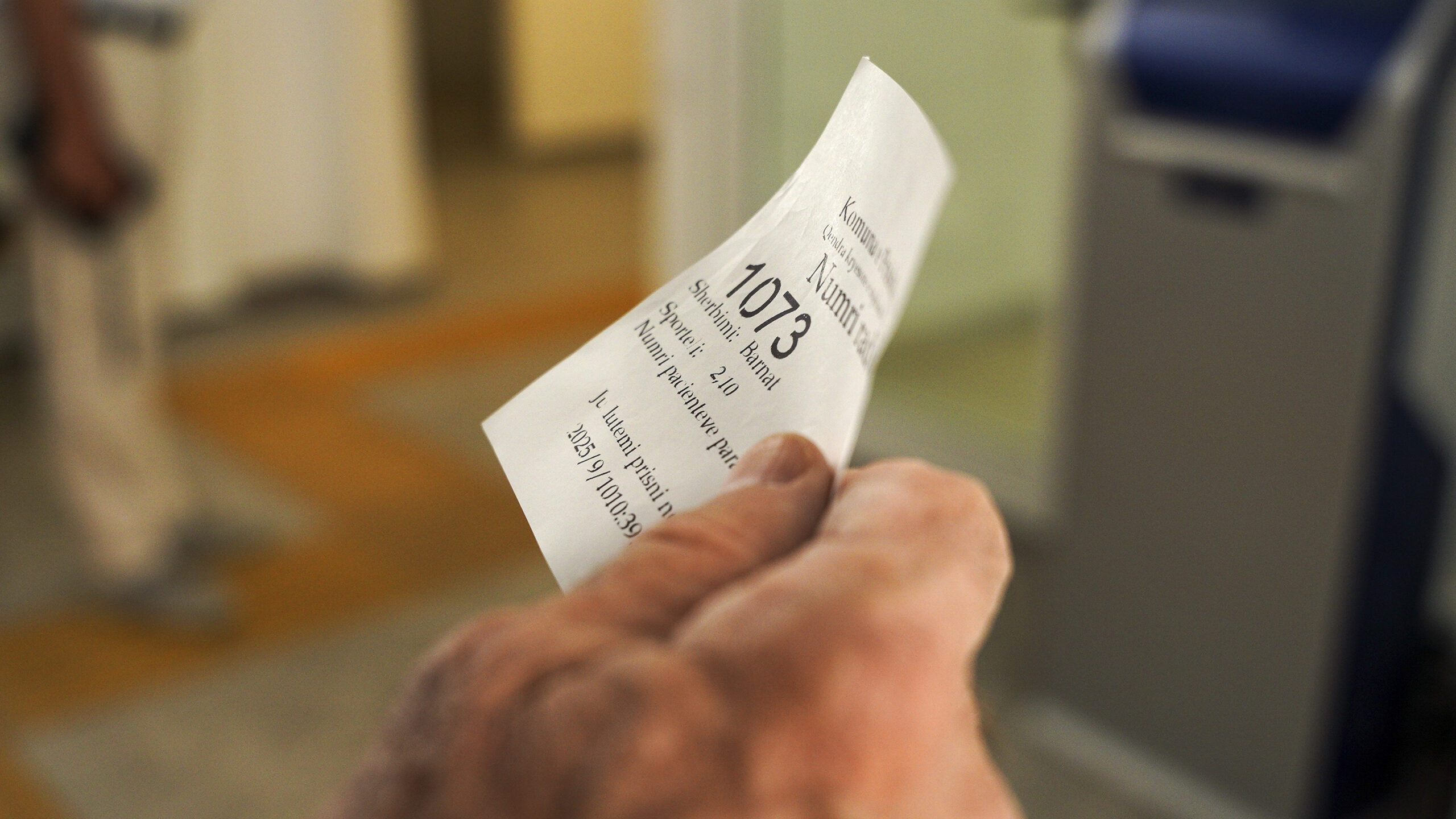
Patients are in the hands of a system that does not recognize them
A decade of failure to make HIS functional leaves patients carrying their own physical files.
|2025.12.01
|
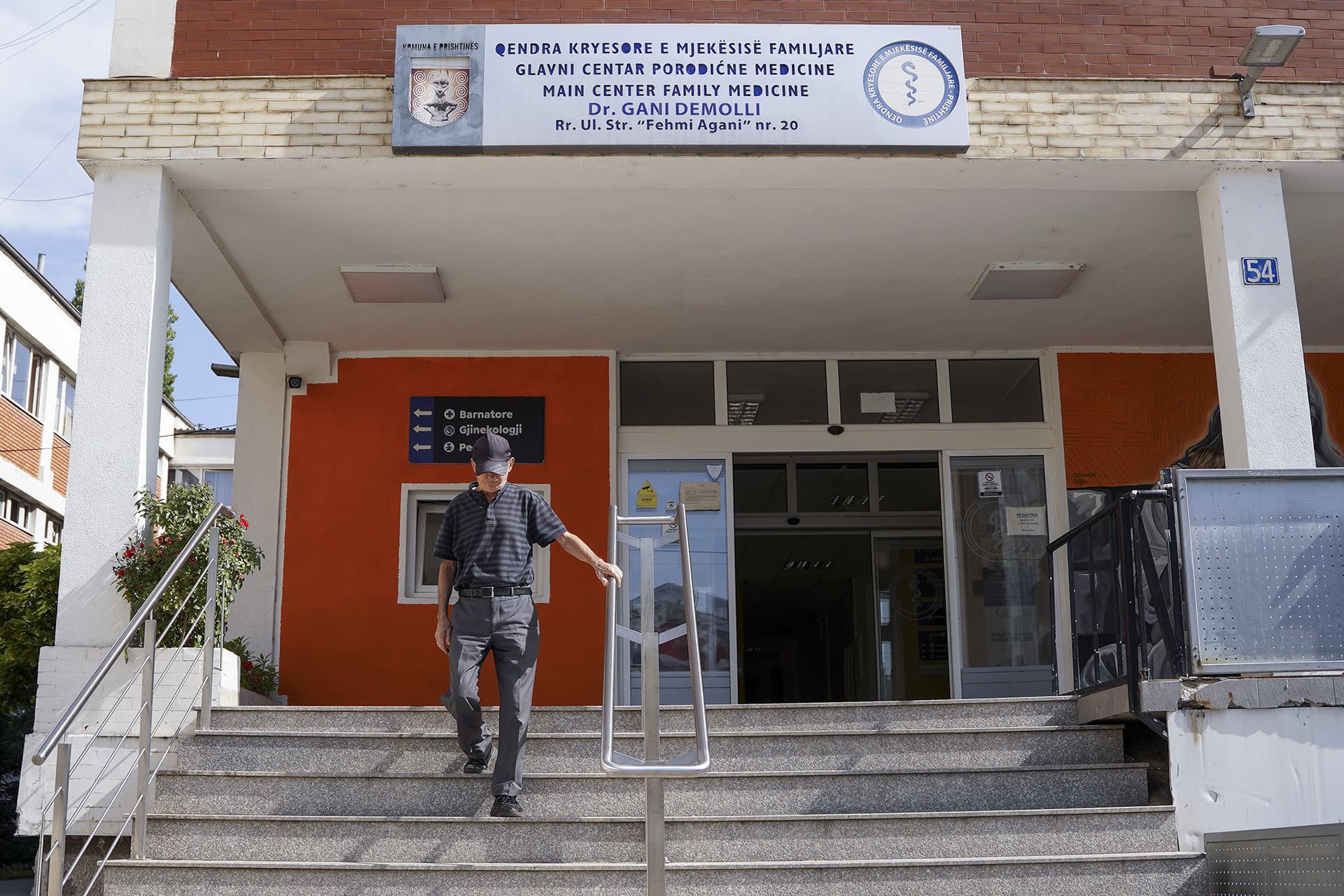
Refiku goes to the MFMC every month and waits to receive a doctor's certificate confirming that he suffers from diabetes, so that he can receive his monthly dose of insulin. Photo: Amir Vitija / K2.0
Even this documentation is insufficient as a record of Refik’s illness.

The booklet he carries in his pocket proves that Refik has been diagnosed with diabetes for over 10 years. Photo: Amir Vitija / K2.0
Without a functional HIS, the system operates as a fragmented and uncoordinated network, where each part functions independently of the others.
In this reality, patients are the sole carriers of their medical documentation, storing and transferring reports, prescriptions and test results from one institution to another.
What is BHIS?
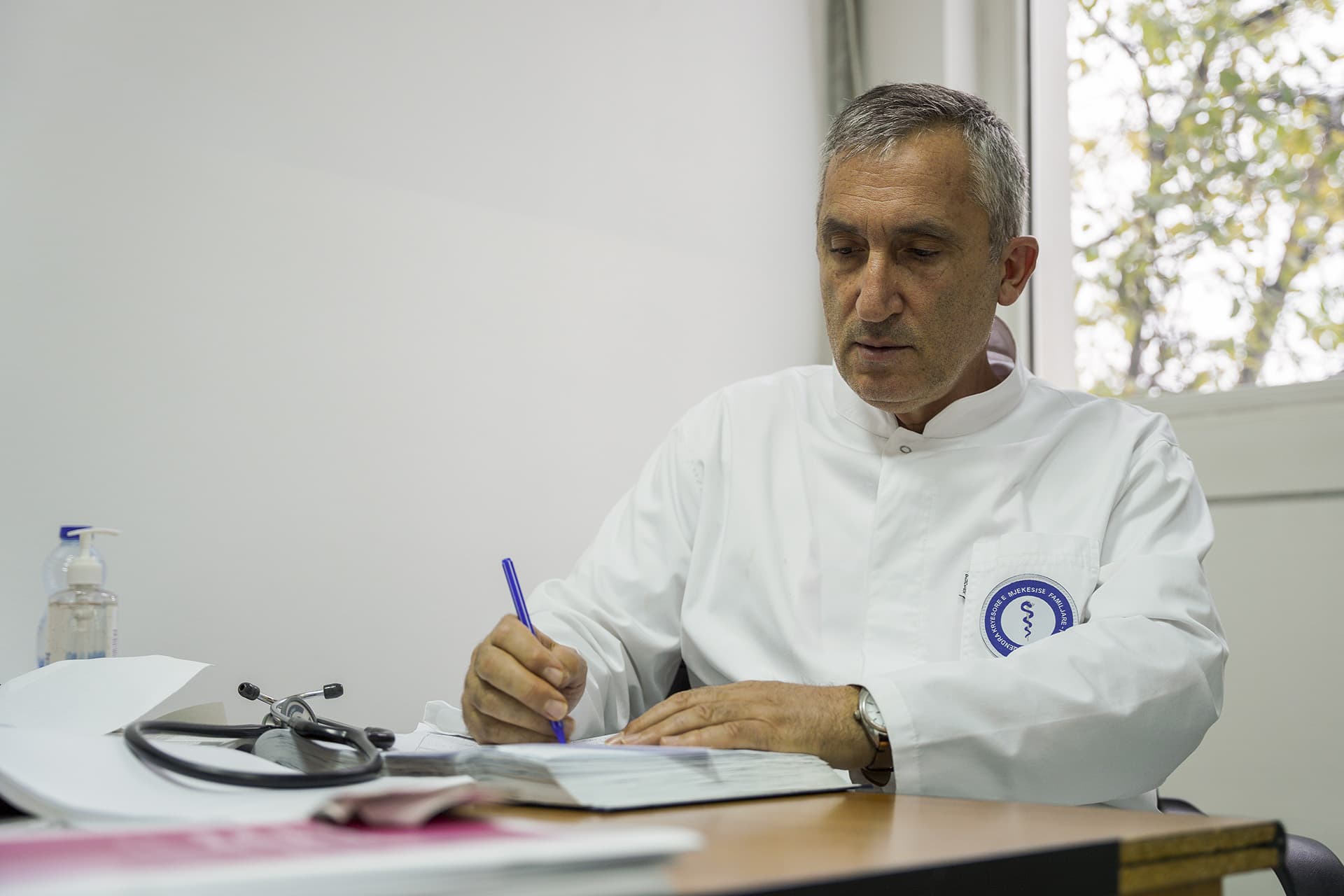
Family Medicine Specialist at the MFMC in Prishtina, Rashit Ismajli, says that when the digital system does not work, doctors are forced to work manually, which takes a lot of time and increases the risk of errors and the unnecessary repetition of examinations. Photo: Amir Vitija / K2.0
In practice, many institutions have maintained a dual system, storing data in both physical and digital form.

The lack of HIS mostly affects chronic patients such as diabetics, those with cardiovascular diseases, asthma, oncological diseases or those who need continuous therapy. Photo: Amir Vitija / K2.0
While documents speak of full digitalization by 2030, the fact that today only 20% of basic systems have been developed shows that the HIS is still very far from becoming a reality — turning its absence into a burden for patients, who carry their files from door to door.
Data is collected in Excel files or paper documents, then cleaned manually and re-entered into Excel to prepare statistical reports.
Modules that need to be integrated to create a national data exchange mechanism
BHIS
(Basic Health Information System) – used in primary care for recording patients and visits;
HMIS
(Hospital Management Information System) – collects clinical, administrative and financial data in hospitals;
LIS
(Laboratory Information System) – tracks laboratory tests and their results;
RIS
(Radiology Information System) – stores and distributes medical imaging such as scans, X-rays or magnetic resonance images.

Taulant Qenaj
Taulant Qenaj is a journalist. He studied Journalism and Mass Communication and has been working as a journalist in Kosovo since 2010. He was part of the national television channel KTV – Kohavision. Then, for five years, he worked as a social media producer and journalist at Radio Free Europe. More recently, he has worked at Gazeta Nacionale and Club FM.
This story was originally written in Albanian.
Want to support our journalism? Join "HIVE" or consider a donation.